
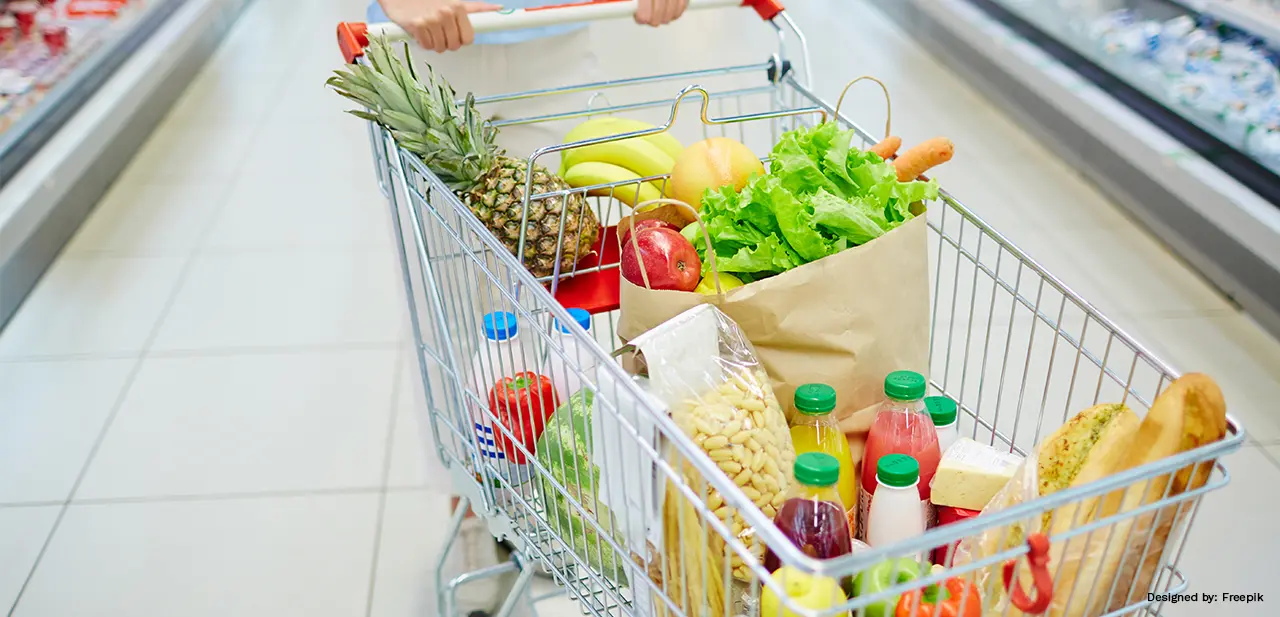
Grocery shopping is an essential part of daily life, no matter where you are in the world. For English learners, it’s also a fantastic, real-world classroom! This expanded guide is designed to make your next trip to the supermarket a fun, confident, and successful everyday English conversation adventure. We’ll explore essential phrases, smart strategies, and even a few cultural insights to help you navigate the aisles like a pro.
Why the Grocery Store is Your English Playground
Think about it: the grocery store is where everyday English truly comes alive. You’re constantly interacting with signs, labels, products, and even people. It’s a low-pressure environment where mistakes are okay, and every interaction helps you improve your language skills.
Learning specific everyday English conversation phrases you need at the grocery store will:
- Save you time and stress: No more guessing or feeling lost! You’ll know exactly how to ask for help, making your shopping trips smoother.
- Boost your confidence: Each successful interaction builds your ability to speak English in other daily situations.
- Open doors to new conversations: You might even make a new friend or get a great tip from a local, expanding your everyday English conversation practice.
- Sharpen your listening skills: Understanding what staff and other shoppers say is key to successful interactions.
Ready to fill your cart with both groceries and confidence? Let’s dive into these crucial everyday English phrases.
Before You Go: Prepare for English Success
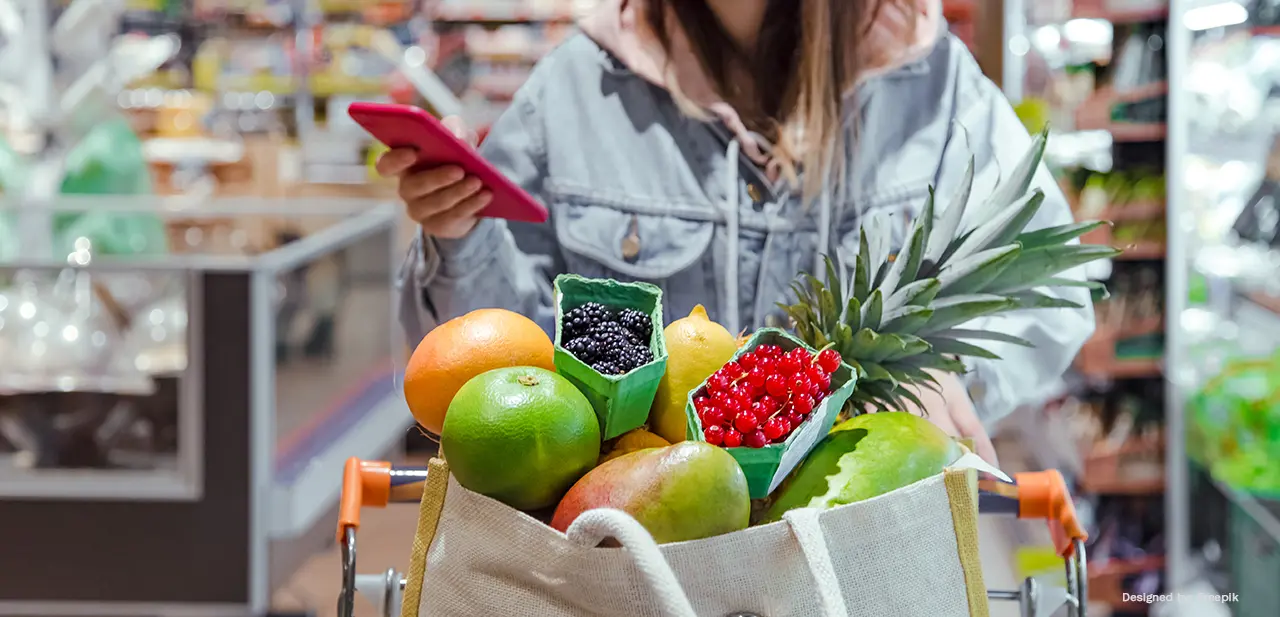
A little preparation goes a long way. Before you even leave your house, you can set yourself up for an excellent everyday English conversation practice session.
1. Make Your Shopping List (in English!)
This is your secret weapon!
Write down everything you need: Don’t just think about it; write it.
Use English words: If you’re unsure of a word, look it up. For example: “milk,” “eggs,” “bread,” “apples,” “chicken,” “rice.”
Add quantities: “A loaf of bread,” “a dozen eggs,” “2 pounds of apples.” This helps with specific vocabulary related to grocery items.
Quick Tip: Say each item on your list out loud a few times. This helps your mouth and brain get ready for real-life everyday English conversation!
2. Know Your Sections: A Mini-Tour of the Store
Grocery stores usually have similar sections. Knowing these can help you find things faster and understand directions, making your grocery store English experience much easier.
Produce Section: Fresh fruits (apples, bananas, oranges) and vegetables (carrots, lettuce, tomatoes).
Dairy Section: Milk, cheese, yogurt, butter.
Meat Section: Chicken, beef, pork, fish.
Bakery: Fresh bread, pastries, cakes.
Frozen Foods: Ice cream, frozen vegetables, frozen meals.
Pantry Items: Canned goods, pasta, rice, snacks, drinks, spices.
Household Items: Cleaning supplies, paper towels, soap.
Boost your English skills! Explore practical idioms and phrases perfect for beginners.

Walking In: Your First English Steps
When you first step into the grocery store, a friendly greeting can make a great first impression. It sets a positive tone and can make staff more willing to help you with your everyday English conversation at the store.
Essential Greetings for the Grocery Store:
“Hi, how are you?”
A warm, general greeting for staff or anyone you meet.
“Good morning/afternoon/evening!”
Choose the greeting that fits the time of day. Simple and polite.
Getting Started with Your Shopping:
“Do you have a cart or basket?”
Use this to ask for something to hold your groceries. A cart (or trolley in British English) is larger, with wheels. A basket is smaller, for just a few items.
“Where’s the fruit and vegetable section?”
A perfect question to start your shopping if you want fresh produce first. You can easily swap “fruit and vegetable section” with any other section you’re looking for, making it a versatile everyday English phrase for the grocery store!
Quick Tip: Always pair these phrases with a smile! People are more likely to help a friendly face, which encourages more everyday English conversation.
Example Dialogue 1: Entering and Asking for a Cart
You: “Hi, how are you?”
Staff: “I’m good, thanks! How about you?”
You: “I’m great, thank you. Do you have a cart or basket?”
Staff: “Yes, they’re right over there by the entrance.”
You: “Thanks!”
Example Dialogue 2: Finding a Section
You: “Good morning! Excuse me, where’s the dairy section?”
Staff: “It’s straight ahead, then to your right, in aisle 2.”
You: “Perfect, thank you so much!”
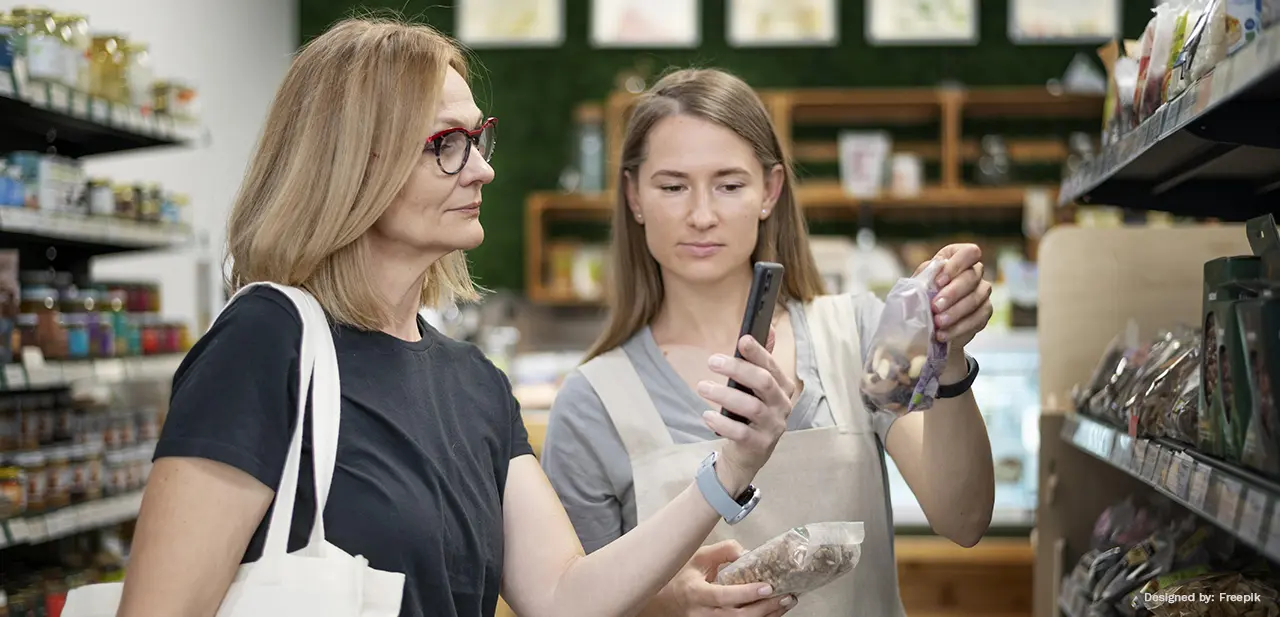
Finding Items: Asking the Right Questions for Grocery Shopping
Navigating a large grocery store can sometimes feel like a treasure hunt! These everyday English conversation phrases you need at the grocery store will help you ask for directions and locate specific products with ease.
Key Phrases to Find What You Need:
“Excuse me, where’s the bread?”
This is your most versatile phrase! Simply replace “bread” with anything you’re looking for: “milk,” “eggs,” “frozen foods,” “cereal,” “bottled water.”
“Do you have sugar?”
Use this to confirm if the store carries a specific product. You can also ask, “Do you carry organic vegetables?” or “Do you have any gluten-free products?”
“Can you show me the snacks?”
If you prefer someone to walk you to the item, this is a polite way to ask for guidance.
“Where can I find the… (e.g., meat section, canned goods, spices)?
Useful for finding entire categories of items.
“Is there a section for organic products?”
If you have specific dietary needs or preferences, this is a great question to use.
Quick Tip: Don’t be shy! Asking questions is one of the best ways to practice your everyday English conversation skills. Most store employees are happy to help.
Example Dialogue 1: Looking for a Specific Item
You: “Excuse me, where’s the coffee?”
Staff: “It’s in aisle 6, next to the tea.”
You: “Thank you! And do you have any decaf coffee?”
Staff: “Yes, that’s in the same aisle, on the top shelf.”
You: “Great, thanks a lot!”
Example Dialogue 2: Asking for Guidance
You: “Can you show me where the detergents are?”
Staff: “Sure, follow me. They’re right over here in aisle 10.”
You: “Thanks so much! I was a bit lost.”
Staff: “No problem at all! Let me know if you need anything else.”
More Examples of Grocery Store Phrases:
“Where can I find the frozen pizza?”
“Do you have fresh basil?”
“Excuse me, what aisle is the pasta in?”
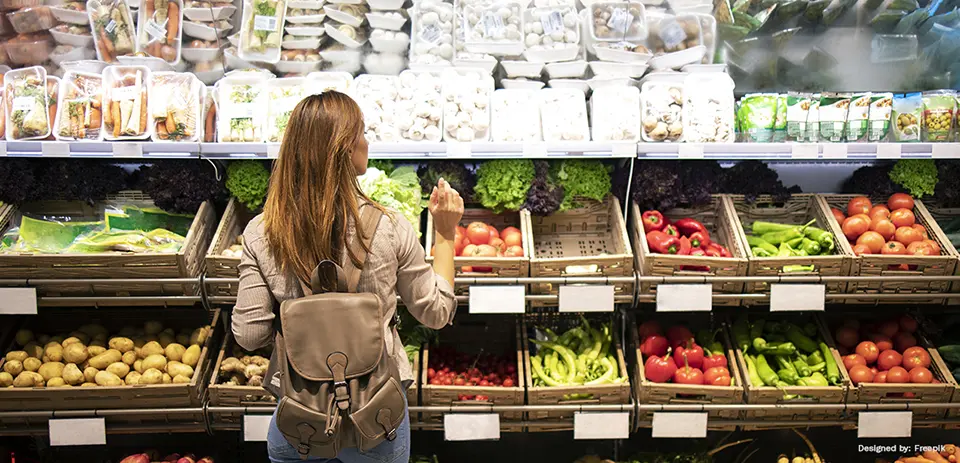
Checking Prices: Smart Shopping in English
Sticking to your budget or finding a good deal is easier when you know how to ask about prices and sales. These are crucial for smart shopping.
Phrases for Price Checks:
“How much is this?”
Point to the item and ask this direct question to find out the cost.
“Is this on sale?”
Always good to check for discounts!
“Are there any deals today?”
Ask about special offers across the store.
“What’s the price per pound?” (or per kilogram)
Useful for items sold by weight, like fruits, vegetables, or meat.
“Do you have a loyalty card for discounts?”
Many stores offer special programs to save money. This is how you ask about them.
“Is this buy one, get one free?”
A common promotion.
Quick Tip: Look for bright signs that say “Sale,” “Discount,” or “Special Offer.” These are your clues for saving money and practicing your everyday English conversation about deals!
Example Dialogue 1: Checking an Item’s Price
You: (pointing to a bag of oranges) “How much is this?”
Staff: “That’s $3.49 per bag.”
You: “Is this on sale?”
Staff: “Yes, it’s 20% off today.”
You: “Wonderful! I’ll take one.”
Example Dialogue 2: Asking About Store Deals
You: “Excuse me, are there any deals on cereal today?”
Cashier: “Yes, many brands are on sale. Check the aisle signs. Also, all dairy products are 15% off.”
You: “Oh, perfect! I’ll definitely grab some milk then. Thanks for the information!”
More Examples of Price-Checking Phrases:
“What’s the price per kilogram for the fish?”
“Is there a discount if I buy two of these?”
“Can I sign up for the loyalty program here?”
Talking to Staff: Keep Your Everyday English Conversation Friendly
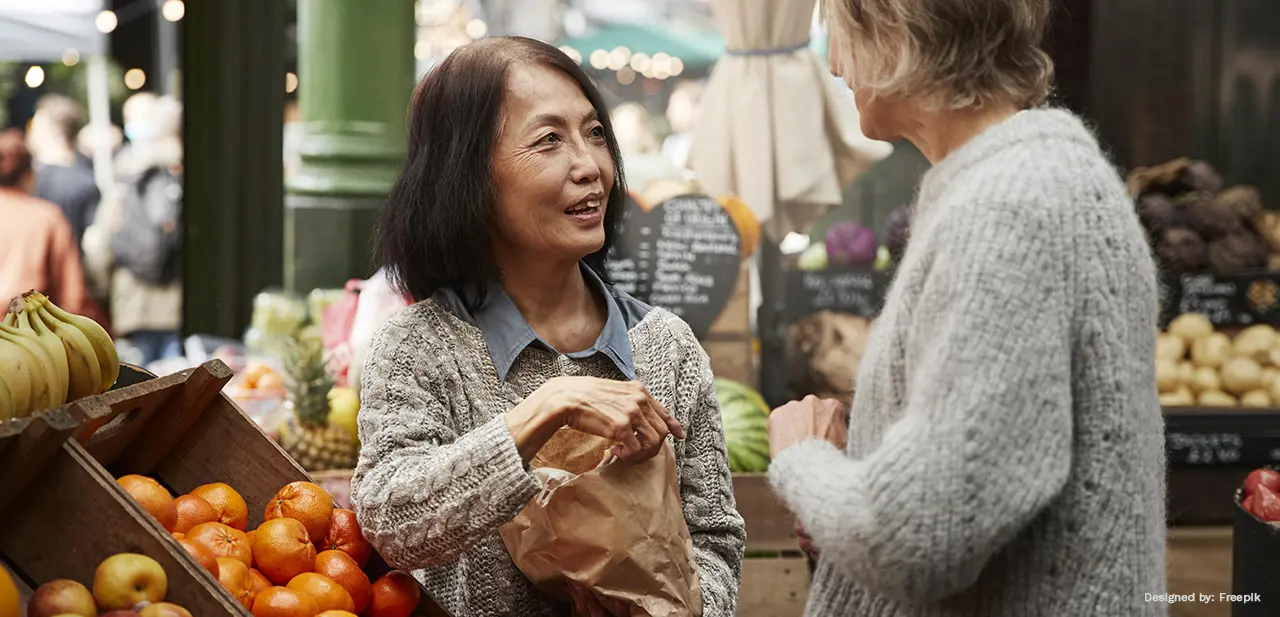
Building a good rapport with store employees can make your shopping trip much more pleasant. Politeness goes a long way in any everyday English conversation!
Phrases to Show Appreciation and Politeness:
“Thanks so much!”
A simple, quick way to show gratitude.
“I really appreciate your help.”
Lets them know their effort was valued.
“Have a nice day!”
A cheerful farewell as you leave or finish an interaction.
“You’ve been very helpful.”
A kind compliment for excellent service.
“I’ll be back soon!”
If you enjoyed your experience and plan to return.
“Sorry to bother you.”
Use this before asking a question if someone seems busy.
“Could you possibly…?”
A very polite way to make a request.
Quick Tip: A sincere “thank you” can make a big difference and might even lead to extra help next time.
Example Dialogue 1: Showing Appreciation
You: “Thanks so much for your help finding the pasta!”
Staff: “You’re welcome! Glad I could assist.”
You: “I really appreciate it. Have a nice day!”
Staff: “You too! Come back soon!”
Example Dialogue 2: A Great Experience
You: “You’ve been incredibly helpful today. Thank you!”
Staff: “My pleasure! Is there anything else I can do for you?”
You: “No, that’s everything. I’ll definitely be back next week!”
Staff: “Fantastic! We look forward to seeing you again.”
More Examples of Polite Phrases:
“Thanks for your patience!”
“I appreciate your time.”
“See you next time!”
“Excuse me, could you possibly tell me where the frozen vegetables are?”

Checking Out: Finishing Your Shopping Trip Strong
You’ve found everything you need, now it’s time to pay! These phrases will help you smoothly navigate the checkout process.
Phrases for Payment and Checkout:
“Can I use my card?”
Confirm if credit or debit card payments are accepted. You can be more specific: “Do you accept credit cards?” or “Can I pay with a debit card?”
“Do you give cashback?”
Ask if you can get extra cash with your purchase. Not all stores offer this.
“Can I have a receipt, please?”
Always a good idea to request a receipt to track your spending.
“Is there a fee for using a card?”
In some places, there might be a small charge for card payments.
“Can I pay with my phone?” (or Apple Pay/Google Pay)
If you use mobile payment apps.
“Do you have bags?” or “Can I get a bag?”
If you need a shopping bag for your groceries. In some places, you might need to pay for bags.
“Could you please scan this for me?”
If you’re at self-checkout and an item isn’t scanning, this is a helpful.
Quick Tip: Always double-check your bags before leaving to make sure you have everything from your everyday English conversation at the register!
Example Dialogue 1: Paying with a Card
Cashier: “Hi, did you find everything okay today?”
You: “Yes, thank you. Can I use my card?”
Cashier: “Yes, we accept all major cards. Just insert it here.”
You: “Great. And can I have a receipt, please?”
Cashier: “Certainly, here you go. Have a great day!”
You: “Thanks, you too!”
Example Dialogue 2: Asking for Cashback
You: “Do you give cashback?”
Cashier: “Yes, up to $50.”
You: “Could I get $20 back, please?”
Cashier: “Sure, no problem. Here’s your cash and your receipt.”
You: “Thank you very much!”
More Examples of Checkout Phrases:
“Is there a fee for using a credit card?”
“Can I pay with Apple Pay?”
“Do you accept checks?” (Less common now, but good to know!)
“How much is the total?”
Bonus Tips for Beginner English Learners
You’re already doing great! Here are some extra tips to supercharge your grocery store English skills and boost your everyday English conversation.
1. Immerse Yourself in English Vocabulary
Before your trip, truly commit to learning key grocery words. Make flashcards, use an app, or just write them down repeatedly.
Essential Food Items: milk, eggs, bread, rice, chicken, beef, fish, apples, bananas, potatoes, onions, tomatoes, cheese, yogurt, pasta, cereal, sugar, salt, coffee, tea, juice.
Packaging & Measurements: a carton of milk, a loaf of bread, a bag of apples, a box of cereal, a can of soup, a jar of jam, a bottle of water, a pound of chicken, a dozen eggs.
Store Terms: aisle, checkout, cashier, shopping cart, basket, receipt, sale, discount.
2. Say It Out Loud (Even When Alone!)
Practice makes perfect. Rehearse these phrases you need at the grocery store at home until they feel natural.
Stand in front of a mirror and say: “Excuse me, where’s the bread?” or “How much is this?”
Record yourself on your phone and listen back. Does it sound natural?
Imagine a conversation with a cashier or staff member. What would they say? How would you respond? This helps with active everyday English conversation.
3. Watch and Learn: Be an Observer
The grocery store is full of real-life English lessons.
Listen to how other shoppers ask for help or how cashiers greet people. This is great for understanding natural everyday English conversation.
Pay attention to the signs around the store. What do they say? (“Exit,” “Restrooms,” “Customer Service,” “No Loitering”)
You might hear new phrases or variations you can try next time! For example, while waiting in line, you might hear someone ask, “Is this the express lane?” (for shoppers with fewer items).
4. Make It a Game: Practice Time!
The best way to master these everyday English phrases you need at the grocery store is through consistent practice.
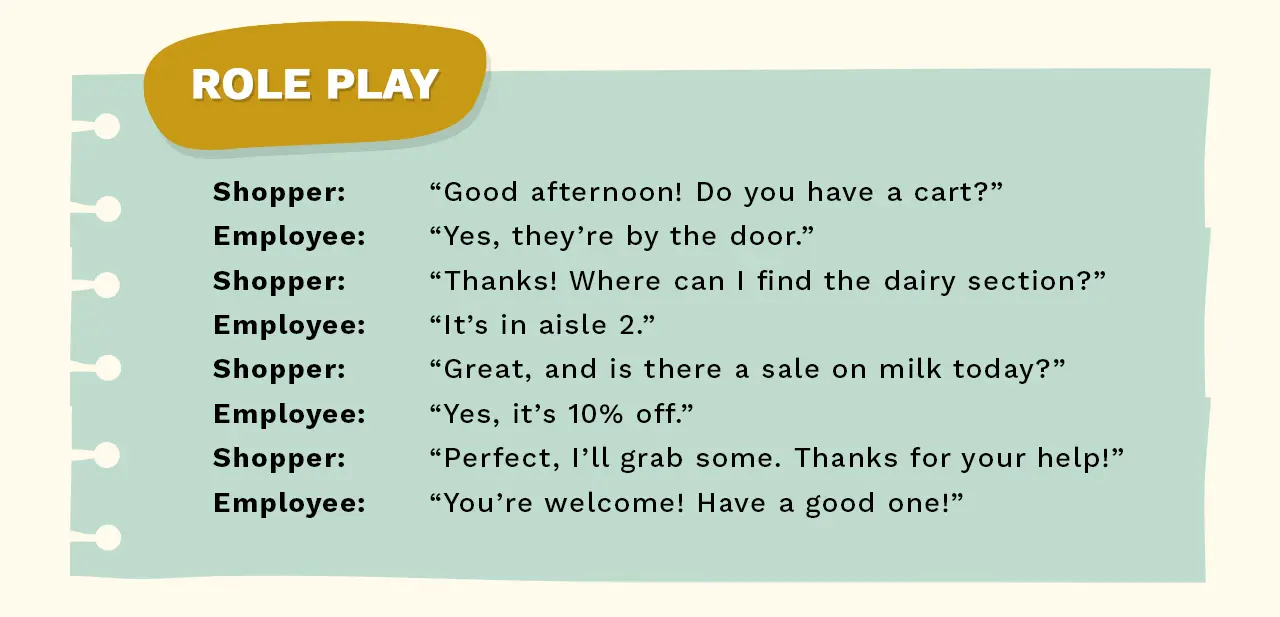
Role-Play with a Friend: One of you is the shopper, the other the employee. Practice greeting, asking for items, checking prices, and checking out. Switch roles to try both sides! This is fantastic for everyday English conversation.
Challenge Yourself: On your next trip, set a goal to use at least three new phrases. Start small, like just a greeting and a thank you, and build from there.
Describe Your Shopping Trip: When you get home, try to tell a friend (or even yourself) about your shopping experience in English. What did you buy? Who did you talk to? What did you say? This reinforces your everyday English conversation skills.
Wrapping Up: Your Confident Shopper Journey
Grocery shopping is far more than just buying food; it’s a golden opportunity to supercharge your everyday English conversation skills. Armed with these practical English phrases, you’ll be able to confidently enter, shop, and check out with ease.
Remember, language learning is a journey, not a race. Don’t stress over small mistakes; every single interaction, every phrase you use, is a step forward. Even using just one new phrase is a win! Over time, you’ll find yourself speaking English more naturally and confidently in all kinds of daily situations.
So, grab your list, hit the store, and enjoy the rewarding experience of practicing your everyday English conversation in the real world. Happy shopping, and happy learning!
Struggling to speak English with confidence? Our beginner-focused courses at EnglishFact provide the perfect foundation to master the basics and unlock your fluency. Get ready to speak English like never before. Have questions? Chat with us on WhatsApp or sign up for a course today!