
Traveling to new destinations is an exhilarating experience, whether you’re wandering the vibrant streets of Tokyo, exploring the romantic canals of Venice, or marveling at the ancient ruins of Machu Picchu. However, for beginner to intermediate English learners, the excitement of travel can come with a concern: “Will I be able to communicate effectively?” The answer is a confident YES! With the right tools, English for travel can empower you to navigate any destination with ease.
This comprehensive guide focuses on two critical skills for any traveler: asking for directions and booking hotels. These are the cornerstones of confident travel communication. We’ll provide you with practical vocabulary, natural sentence patterns, and realistic dialogues to help you master these scenarios. By the end, you’ll be equipped to handle asking for directions and booking hotels like a pro, turning travel challenges into opportunities for connection and discovery.

Why Learning English for Travel is Essential
Picture this: You’ve just arrived in a bustling city, but your phone battery is dead, and you’re unsure which way to turn. Or, you’re at a hotel counter, and there’s a mix-up with your reservation. In these moments, English for travel becomes your lifeline. Mastering key phrases for asking for directions and booking hotels allows you to:
- Solve problems independently: Navigate without relying on guides or apps.
- Connect with locals: Engage in conversations and uncover local insights.
- Boost confidence: Communicate clearly to reduce travel stress.
- Handle surprises: From delayed flights to misplaced bookings, clear communication saves the day.
This guide isn’t about fluency; it’s about building a practical toolkit for English for travel that ensures you can confidently ask for directions and book hotels in any English-speaking environment.

Part 1: Asking for Directions Like a Local
Getting lost is part of the adventure, but with the right English for travel phrases, asking for directions becomes a chance to interact with locals and discover hidden gems. Let’s break down the vocabulary, phrases, and strategies to make asking for directions seamless.
Essential Vocabulary for Asking for Directions
To ask for and understand directions, you need a solid foundation of terms. Here’s a curated list for English for travel:
Nouns:
Street / Road / Avenue / Boulevard: Types of pathways (e.g., Oxford Street, Fifth Avenue).
Intersection / Crossroads: Where roads meet.
Corner: The angle where two streets connect.
Traffic lights: Signals controlling traffic.
Roundabout / Traffic circle: A circular road junction.
Sidewalk / Pavement: The pedestrian path.
Landmark: A recognizable feature (e.g., a statue, a tower).
Block: The distance between two intersections.
Public transport: Buses, subways, or trams.
Station / Stop: Where public transport operates.
Platform: The waiting area for trains or subways.
Exit / Entrance: Access points for buildings or stations.
Verbs of Movement:
Go straight / Keep going straight: Continue forward.
Turn left / Turn right: Change direction.
Go past / Pass: Move beyond a point.
Cross: Move to the opposite side.
Follow: Stay on a path.
Walk: Travel on foot.
Take: Use a bus, train, or subway.
Prepositions of Place:
On / At: On the corner, at the station.
Near / Close to: A short distance away.
Next to / Beside: Directly adjacent.
In front of / Behind: Relative positions.
Opposite / Across from: On the other side.
Between: In the middle of two points.
Around: In the general area.

Polite Ways to Ask for Directions
Politeness is key when asking for directions in English for travel. Starting with a friendly tone sets the stage for a helpful response. Use these openings:
“Excuse me,”
“Pardon me,” (common in North America)
“Hello,” (followed by a question)
Sentence Patterns for Asking for Directions
Here are practical phrases to master asking for directions:
General Location:
“Excuse me, could you tell me where the [museum/train station] is?”
“Pardon me, do you know how to get to [Central Park]?”
“Hello, is the [tourist office] far from here?”
Specific Routes:
“What’s the easiest way to get to [the Eiffel Tower]?”
“Could you tell me how to reach [the nearest subway station]?”
“I’m trying to find [Union Square]. Can you help?”
Clarification and Confirmation:
“Could you repeat that, please?”
“Did you say turn left or right?”
“So, I go straight, then turn right at the second corner, right?”
“Is it within walking distance?”
“How far is it from here?”
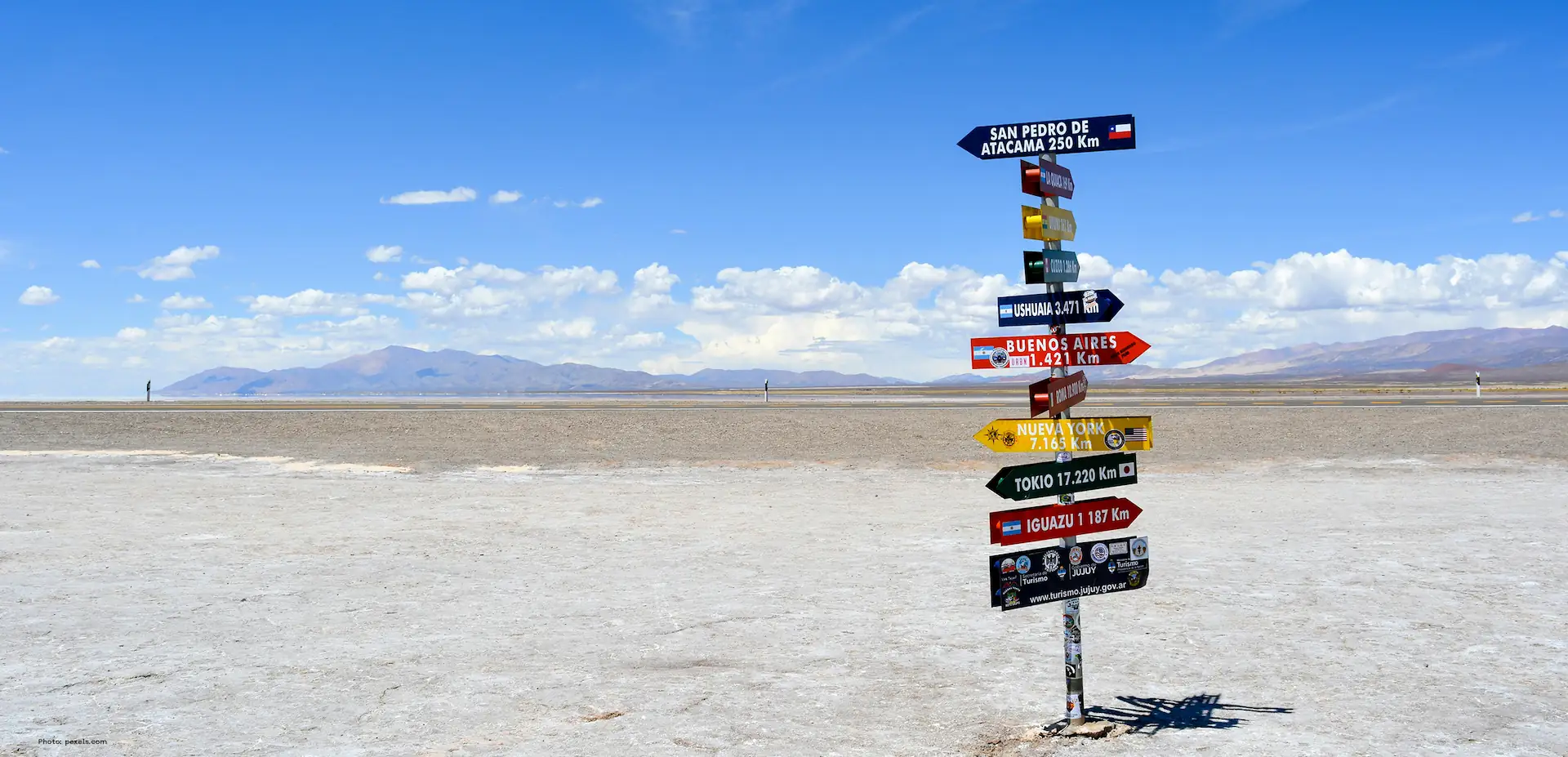
Understanding Responses When Asking for Directions
Locals may use these phrases when responding to your request for directions:
“Go straight for [three blocks/ten minutes].”
“Turn left/right at the [first/second] traffic lights.”
“You’ll see it on your [left/right].”
“It’s just around the corner.”
“Go past the [bank/cafe].”
“Cross the street at the intersection.”
“Take the [number 5] bus.”
“It’s opposite the [library].”
“Follow this road until the [roundabout].”
Dialogue Example: Asking for Directions
Scenario: You’re in a busy city and need to find the Art Gallery.
You: “Excuse me, could you help me? I’m trying to find the Art Gallery.”
Local: “Sure! It’s not far. Go straight down this street until you hit the second traffic lights. Turn left onto King Street, then walk past a big fountain. The gallery is on your right, next to a coffee shop.”
You: “So, straight to the second traffic lights, left onto King Street, past the fountain, and it’s on the right?”
Local: “Exactly! It’s about a five-minute walk. You can’t miss it.”
You: “Thank you so much!”
Local: “My pleasure. Enjoy the gallery!”
Tips for Asking for Directions
Smile and make eye contact: It builds rapport.
Speak clearly and slowly: Helps ensure understanding.
Use a map or phone: Pointing can clarify your request.
Repeat directions back: Confirms accuracy and aids memory.
Ask for clarification: Don’t hesitate to say, “Could you say that again?”
Express gratitude: A simple “thank you” goes a long way.
Want to talk with more confidence? Discover how to start a conversation and keep it going smoothly.
Part 2: Booking Hotels with Confidence
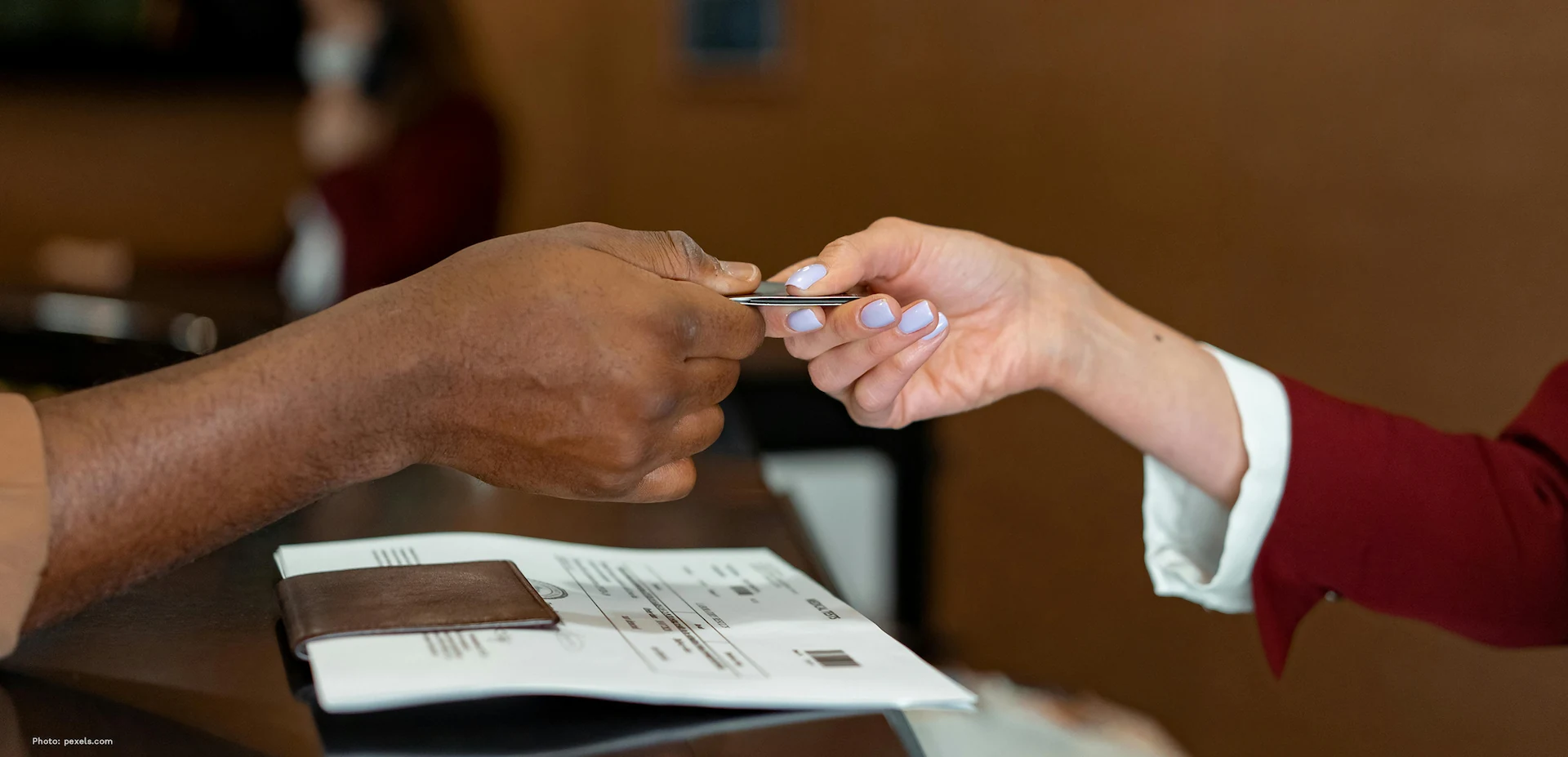
A comfortable hotel is your home away from home, and knowing how to handle booking hotels in English for travel ensures a smooth experience, whether reserving in advance or checking in on arrival.
Essential Vocabulary for Booking Hotels
Familiarize yourself with these terms for seamless hotel interactions:
Room Types:
Single room: One bed for one person.
Double room: One large bed for two.
Twin room: Two single beds for two.
Triple room: For three guests.
Suite: Larger room with separate living/sleeping areas.
Accessible room: Designed for guests with disabilities.
Hotel Amenities:
Reception / Front Desk: Check-in and check-out area.
Lobby: Main entrance area.
Concierge: Staff for local tips and bookings.
Lift / Elevator: For floor access.
Restaurant / Dining room: For meals.
Gym / Pool: For fitness or relaxation.A
Wi-Fi: Internet access.
En-suite bathroom: Private bathroom in the room.
Minibar: In-room fridge with snacks/drinks.
Safe: For storing valuables.
Room service: Food/drink delivery to your room.
Booking Terms:
Reservation / Booking: Pre-arranged room.
Check-in / Check-out: Arrival and departure processes.
Availability / Vacancy: Room availability.
Rate / Price: Cost per night.
Deposit: Upfront payment.
Confirmation number: Reservation code.
Cancellation policy: Rules for canceling.
No-show: Not arriving without canceling.
Late check-out: Leaving after standard time.

Phrases for Booking Hotels
Whether booking by phone, online, or in person, these phrases will help:
Checking Availability:
“Do you have any rooms available for [tonight/August 12th]?”
“I’d like to book a double room for [three nights], starting [August 15th].”
“Are there any twin rooms from [August 20th to 23rd]?”
Room Preferences:
“I’d prefer a room with a city view.”
“Is there a room on a higher floor?”
“Does the room have air conditioning?”
“Is breakfast included in the rate?”
Hotel Amenities:
“Is Wi-Fi available in the rooms?”
“Do you have a pool or fitness center?”
“What are the check-in and check-out times?”
“Is parking available?”
Confirming Details:
“What’s the total cost per night?”
“Can I pay with a credit card?”
“Could you confirm my reservation?”
“What’s your cancellation policy?”

Checking In at a Hotel
Upon arrival, head to the reception desk and use these phrases:
Announcing Arrival:
“Hello, I have a reservation under [Your Name].”
“Good afternoon, I’d like to check in. My name is [Your Name].”
“I booked a twin room for tonight.”
Responding to Questions:
“Here’s my passport.”
“My confirmation number is [ABC123].”
“I booked online through [website].”
Asking for Information:
“What’s my room number?”
“Where’s the elevator?”
“What time is breakfast?”
“What’s the Wi-Fi password?”
“Can you recommend a nearby restaurant?”
Dialogue Example: Checking In at a Hotel
Scenario: You arrive at your hotel after a long flight.
You: “Good evening. I have a reservation under the name of Alex Patel.”
Receptionist: “Welcome, Mr. Patel. May I have your passport and confirmation number, please?”
You: “Here’s my passport. The confirmation number is XYZ456.”
Receptionist: “Thank you. I have a double room for two nights. Is that correct?”
You: “Yes, that’s right.”
Receptionist: “Great. Your room is 305, on the third floor. The elevator is to your right. Breakfast is from 6:30 AM to 9:30 AM in the dining area. The Wi-Fi password is ‘HotelGuest2025’.”
You: “Perfect. What time is check-out?”
Receptionist: “Check-out is at 11 AM. Let us know if you need a late check-out.”
You: “Thank you!”
Receptionist: “Enjoy your stay!”
Want to talk about your schedule? Master telling the time in English with these easy tips.

Handling Hotel Issues or Requests
If something goes wrong, use these phrases:
“The key card isn’t working.”
“The air conditioning in my room isn’t functioning.”
“Could you send someone to fix the [shower/light]?”
“Can I have an extra towel?”
“Is a late check-out possible?”
“I locked myself out of my room.”
“I need a taxi for 8 AM tomorrow.”
Tips for Booking Hotels and Checking In
Be clear about needs: Specify room type or amenities upfront.
Confirm details: Double-check dates, rates, and policies.
Stay polite: A friendly tone resolves issues faster.
Have documents ready: Passport and confirmation number speed up check-in.
Ask about extras: Inquire about breakfast, Wi-Fi, or parking.

General Tips for English for Travel
To excel at asking for directions and booking hotels, keep these tips in mind:
Embrace mistakes: Communication matters more than perfection.
Speak slowly: It helps both you and the listener.
Use gestures: Pointing or miming can clarify your message.
Be patient: Allow time for understanding.
Carry a notebook: Jot down directions or key phrases.
Use offline tools: Download maps or translation apps.
Learn local greetings: A “hello” or “thank you” in the local language builds goodwill.
Your Journey Awaits!
With this English for travel guide, you’re ready to master asking for directions and booking hotels. These skills open doors to confident exploration, from finding hidden cafes to securing a cozy hotel room. Every conversation is a chance to grow, connect, and make your travels unforgettable. Pack your bags, practice these phrases, and embark on your next adventure with the confidence that English for travel brings. Safe travels!
Dreaming of smoother travels? Our beginner-friendly English courses at EnglishFact will equip you with the confidence and fluency to navigate new places, chat with locals, and make every trip unforgettable. Don’t let language barriers hold you back, chat with us now on Whatsapp or sign up today!!